Garden season doesn't end when the clocks change. It ends when the cold reaches your shoulders and nobody wants to be the one who says they're going in. Deal with the shoulders — and the ankles, and the wind — and you can sit outside comfortably from March to November rather than for the six weeks of proper summer.
Outdoor warmth reaches you in three ways: radiation (heat travelling in a straight line from a hot surface to your body), convection (warmed air drifting about) and conduction (whatever you're sitting on, holding or wearing). In an open garden, convection is largely a lost cause, because warm air rises and the breeze carries it off. Radiation and conduction do the heavy lifting. So build upwards in layers, starting with the cheapest and working towards the most expensive.
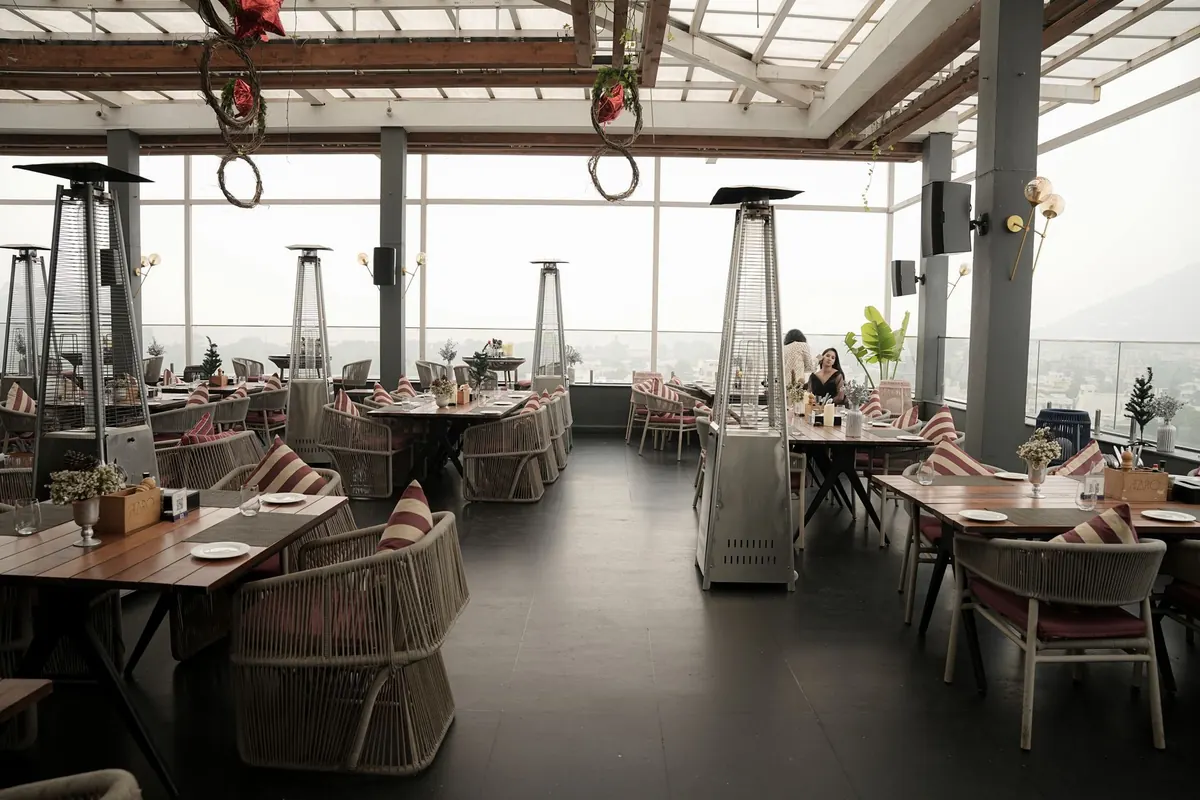
Infrared patio heaters — electric or gas — warm people and objects in front of them rather than the air, which is exactly what you want outdoors. Position one so it faces the seating, not the middle of the patio, and accept that it has a working radius of a few metres. Two modest heaters aimed at opposite sides of a table usually beat one large one blasting in a single direction.
A wood-burning fire pit, chiminea or brazier gives you radiant heat at close range and, just as importantly, a reason to stay put. A fire is poor at heating a wide area and excellent at heating the two or three people nearest to it, so arrange seating in a tight arc rather than a scattered circle. A chiminea placed near a wall will bounce some warmth back at you; a fire pit in open ground gives most of its heat to the sky.
Cold seats undo good work. Chunky cushions, sheepskin throws, heated seat pads and a basket of blankets by the door make an enormous difference because they stop heat leaving your body by conduction. A hot water bottle under a throw is old-fashioned and genuinely effective.
A hot drink, a bowl of something warm and a bit of movement around the fire all help. So does food cooked outside — people stay longer when there's a reason to.
Wind steals more warmth than a small heater can add. Shelter first, then heat.
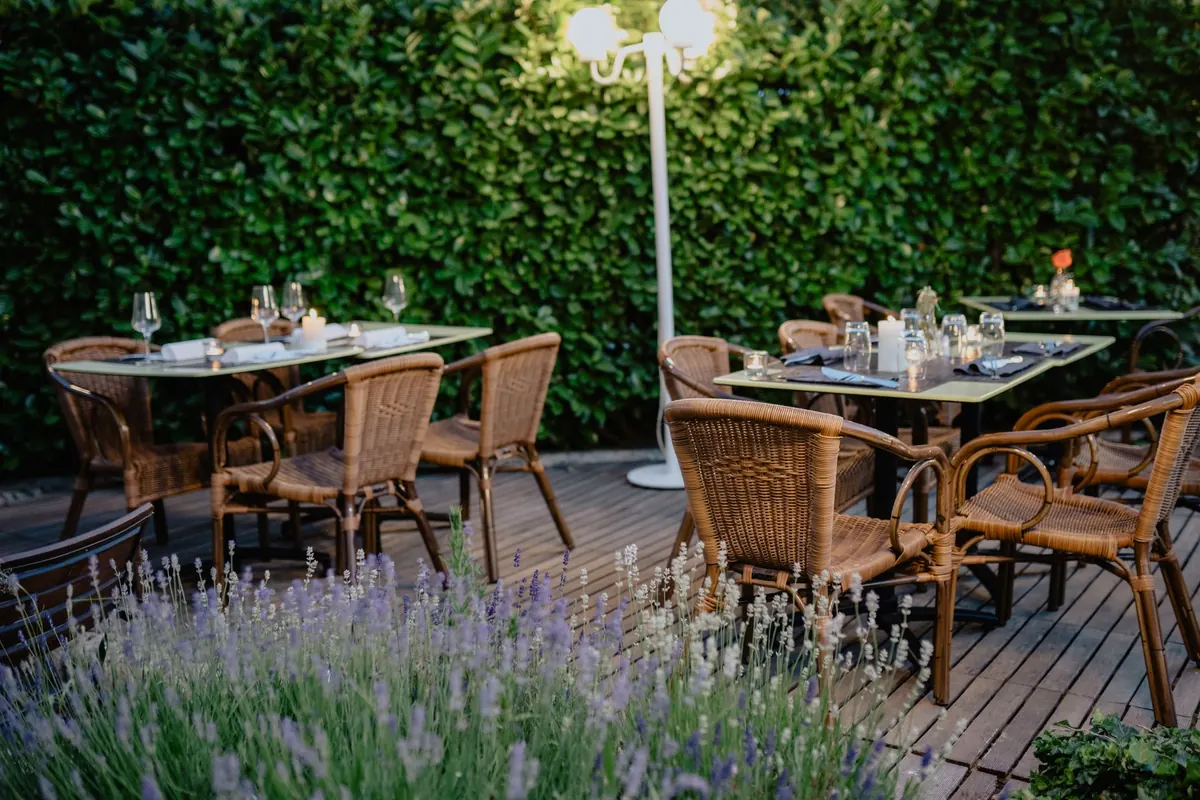
In most British gardens the prevailing wind comes from the south-west, and the difference between a gusty corner and a sheltered one can feel like several degrees. Aim to slow the wind, not seal it out. Slatted screens, trellis with climbers, and hedges break up gusts gently. A solid panel tends to push air up and over, only for it to curl back down behind the barrier, which can be worse than nothing.
Overhead cover matters too. A pergola with a slatted or polycarbonate roof, or a taut shade sail, keeps rain off and traps a little rising heat. Just don't fully enclose a space that contains a fire or a gas heater — ventilation is not optional.
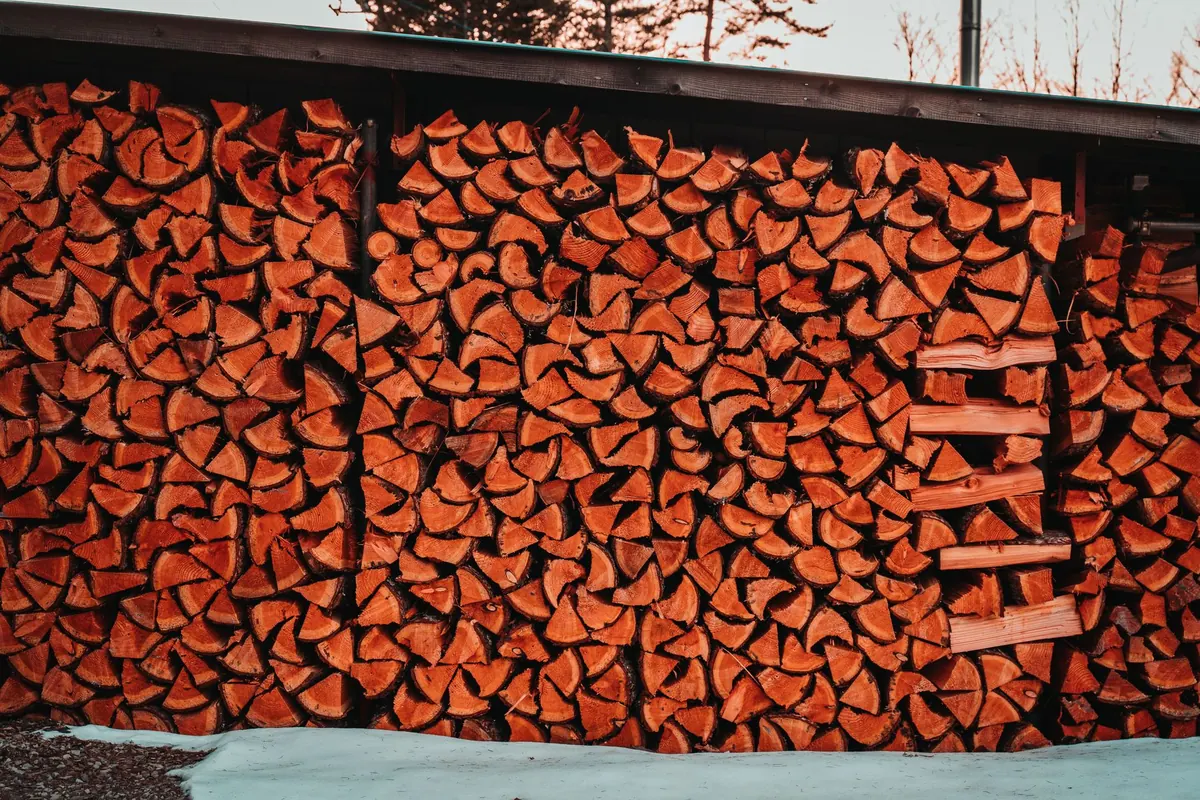
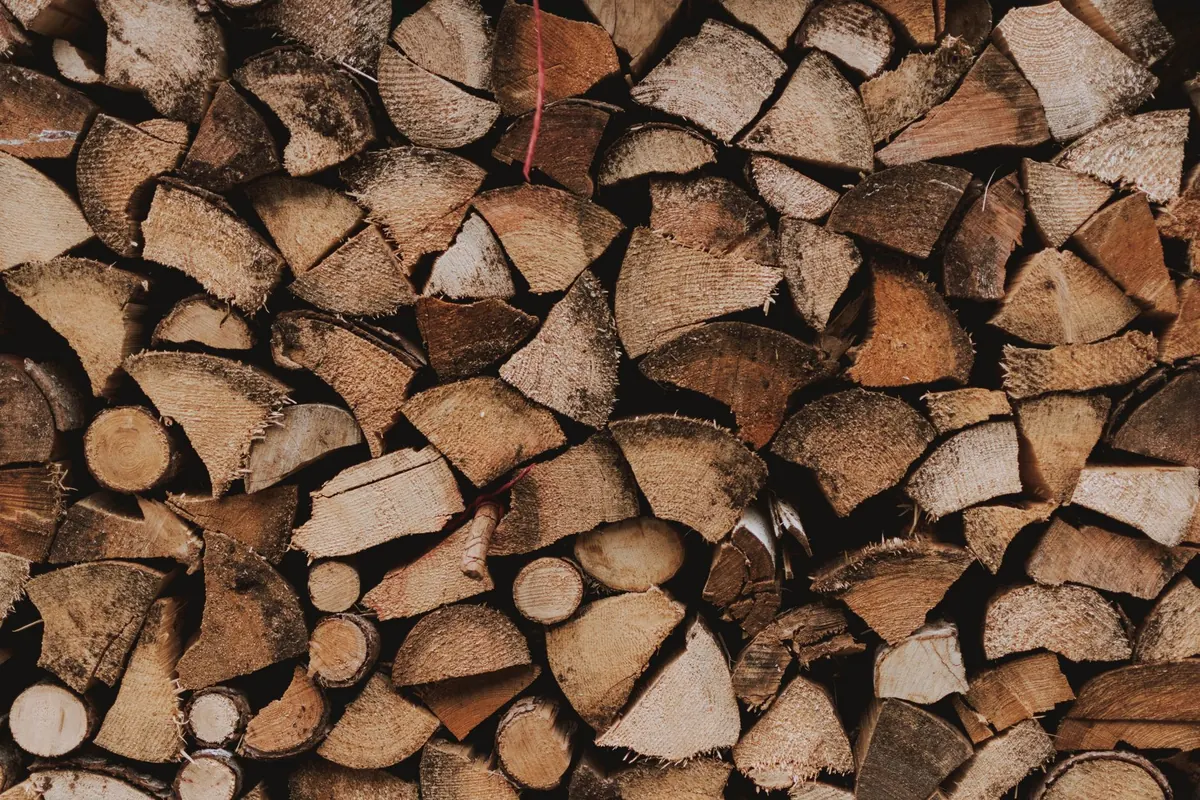
Look for the corner of your garden that faces south or west and has a wall, fence or hedge behind it. Brick, stone and paving soak up warmth during the day and release it slowly into the evening; a stack of dry logs does something similar on a smaller scale. Move your seating into that corner from late summer onwards rather than trying to heat the whole patio.
March to April. Start in the afternoon, not the evening, and let the day's warmth do the first hour. Windbreak up, blankets out, a small fire or one infrared heater for when the sun drops.
May to June. The easiest stretch. Keep a light throw and one heater on standby for after nine o'clock.
July to August. Barely any heating needed, though a fire still earns its place. Store fuel somewhere dry so it's ready for autumn.
September to October. Peak season for outdoor heating. Layer everything: windbreak, overhead cover, radiant heater, fire, blankets. Move the furniture into the sheltered corner and accept that evenings get shorter.
November. Possible, but only in your best-protected spot, and usually for an hour rather than three. If it's a struggle, stop — there's no prize for stubbornness.
A few habits keep this enjoyable rather than risky:
You don't need to kit out the garden at once. Pick your most sheltered corner. Put up one windbreak on the windy side. Then buy one radiant heater, or get the fire pit out and lay in a decent store of dry wood. Sit out for an hour with a blanket and a hot drink and see where the cold actually gets you.
That last part matters, because it tells you what to add next — usually a warmer seat, occasionally a second heat source, and almost never a bigger one. Once you know where the draught comes from, extending the season past September stops being a battle and becomes a habit.
Photo: Boris Ivas / Pexels